Save up to 30% on home batteries with Queensland Solar Rebate More Info

Save up to 30% on home batteries with Queensland Solar Rebate More Info

Save up to 30% on home batteries with Queensland Solar Rebate More Info

EV Charger Installation
on the Sunshine Coast

Customizable
Sustainable
Affordable pricing
Watch How It Works

Transform sunlight into clean, cost-effective energy for your home or business with our reliable solar solutions.

Why Most EV Owners Install a Home Charger

Public EV charging infrastructure on the Sunshine Coast is growing, but it is designed for top-ups on the road, not the daily routine of keeping a vehicle charged. Planning your day around station availability, waiting for a charger to free up, or driving out of your way to find a working unit quickly becomes inconvenient.


A home charging station changes the relationship with your vehicle. You plug in when you arrive home, and the car is ready in the morning. The cost per kilowatt-hour at home, particularly during off-peak hours or when charging from a solar system, is also considerably lower than most public fast-charging networks.


For the majority of EV owners on the Sunshine Coast, a home charger is the most practical and cost-effective charging option for day-to-day use.

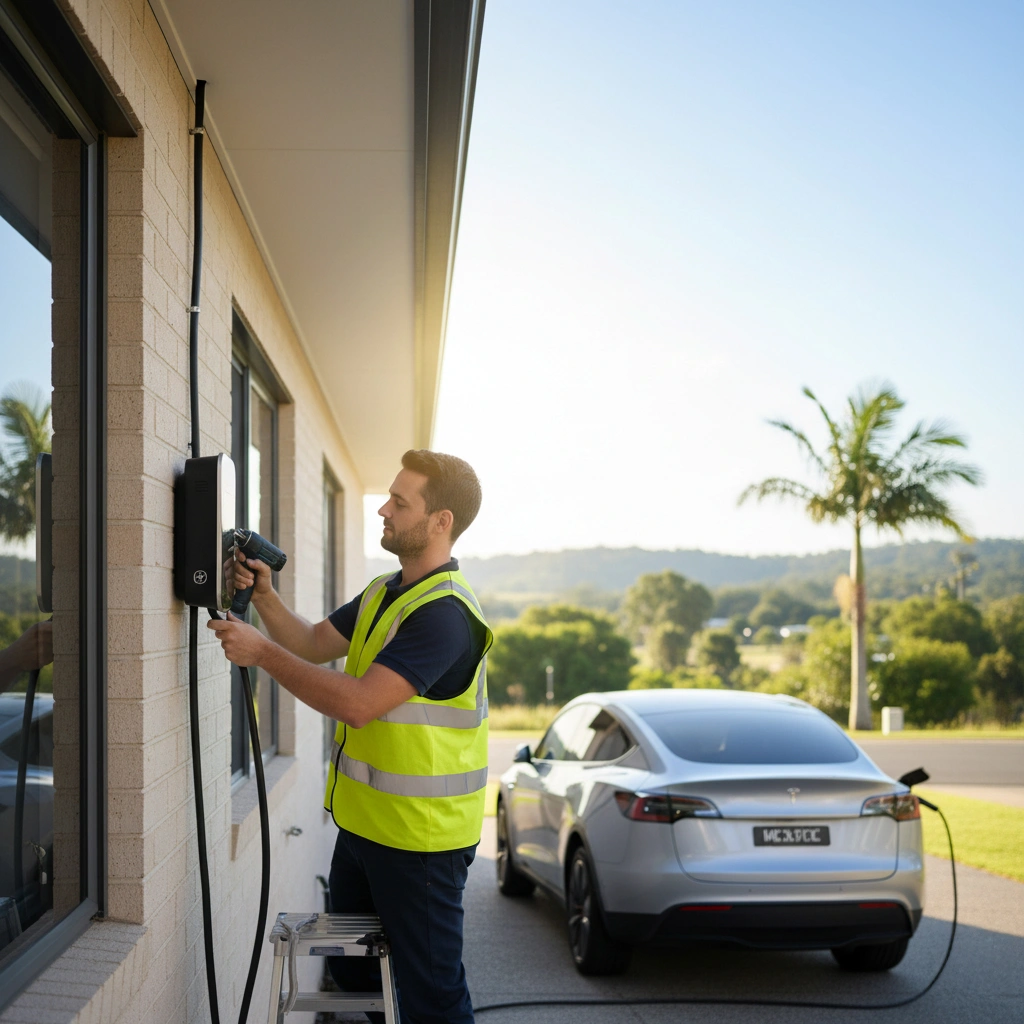
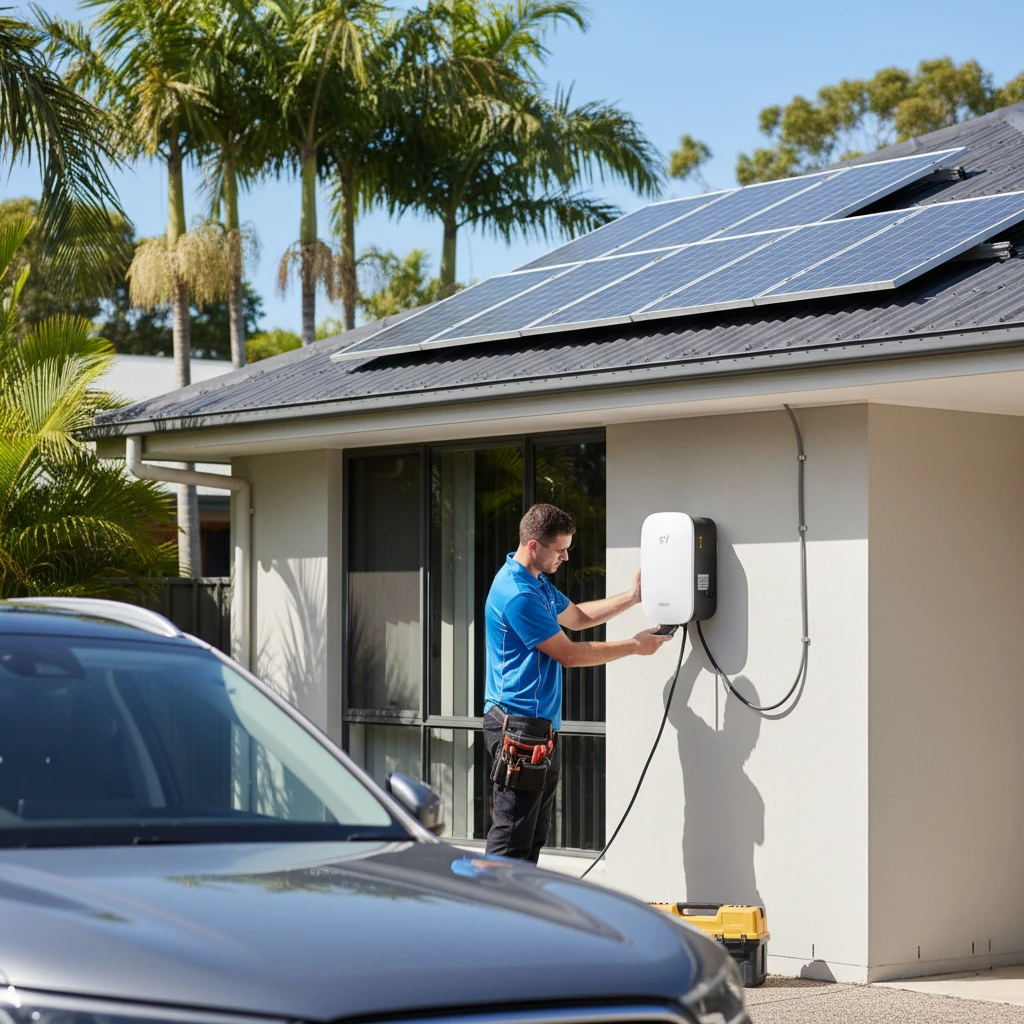
Technician installing an EV charger at a home in Rockhampton with an electric vehicle parked nearby.

Choosing the Right Charger for Your Home

Charging Speed and Daily Range

AC chargers are the standard option for home installation in Australia, available in two main power ratings: 7kW and 22kW.


A 7kW charger runs on a standard single-phase supply and adds enough range per hour to fully replenish the daily driving distance of most Sunshine Coast households overnight. For the majority of residential installations, a 7kW unit on a dedicated circuit is the most practical choice.


A 22kW charger requires a three-phase power connection, which is available on some properties but not all. It suits households with higher daily mileage, multiple electric vehicles, or properties already set up with three-phase supply. The maximum charge rate also depends on your vehicle’s onboard AC charger: a car limited to 7.4kW will not benefit from a 22kW unit regardless of what is installed on the wall. We confirm your vehicle’s charging capacity and your property’s electrical supply during the site assessment before recommending anything.

Tethered chargers have a cable permanently attached to the unit. They are convenient for single-vehicle households where the same cable type is used every time.

Untethered chargers have a Type 2 socket instead of a fixed cable. You connect using your own cable, which offers more flexibility if you own or plan to own more than one EV model. Both configurations use the Type 2 connector standard, which is compatible with all electric vehicles currently sold in the Australian market.

Step 1

Site Assessment and Quote Design

Your installation starts with a free consultation and on-site inspection.

Our team evaluates your property’s power supply, parking location, and energy usage to design the ideal charging setup.

You’ll receive solutions tailored to every budget, without compromising on quality.

Step 2

Expert Installation and Testing

Once approved, our technicians install and configure your EV charger safely and efficiently.

We test all electrical connections, verify charging speeds, and ensure compliance with regulations. After setup, you’ll receive system documentation and warranty coverage.

Our team remains available for ongoing support or future upgrades.

Charging Your EV with Solar Power

If you already have solar panels installed, or are planning to add them, there is a practical case for integrating your EV charger with your solar system. During daylight hours, a solar system often generates more than a household consumes. That surplus is normally exported to the grid at the feed-in tariff rate. Directing it to charge your vehicle instead means using generated solar energy at full value rather than selling it back cheaply.


Some EV charger units support solar-optimised or scheduled charging, allowing the charger to activate when solar export rises above a set threshold. The vehicle needs to be plugged in during generation hours for this to work, which suits households where a car is parked at home during the day.


Pairing a solar system with a battery and an EV charger provides the most flexibility: stored battery energy can be used for evening or overnight charging when solar is not generating. If you are considering this combination, National Solar Network can assess and design all three components together as a single system. See our solar battery storage service for more detail on how battery and EV charging interact.

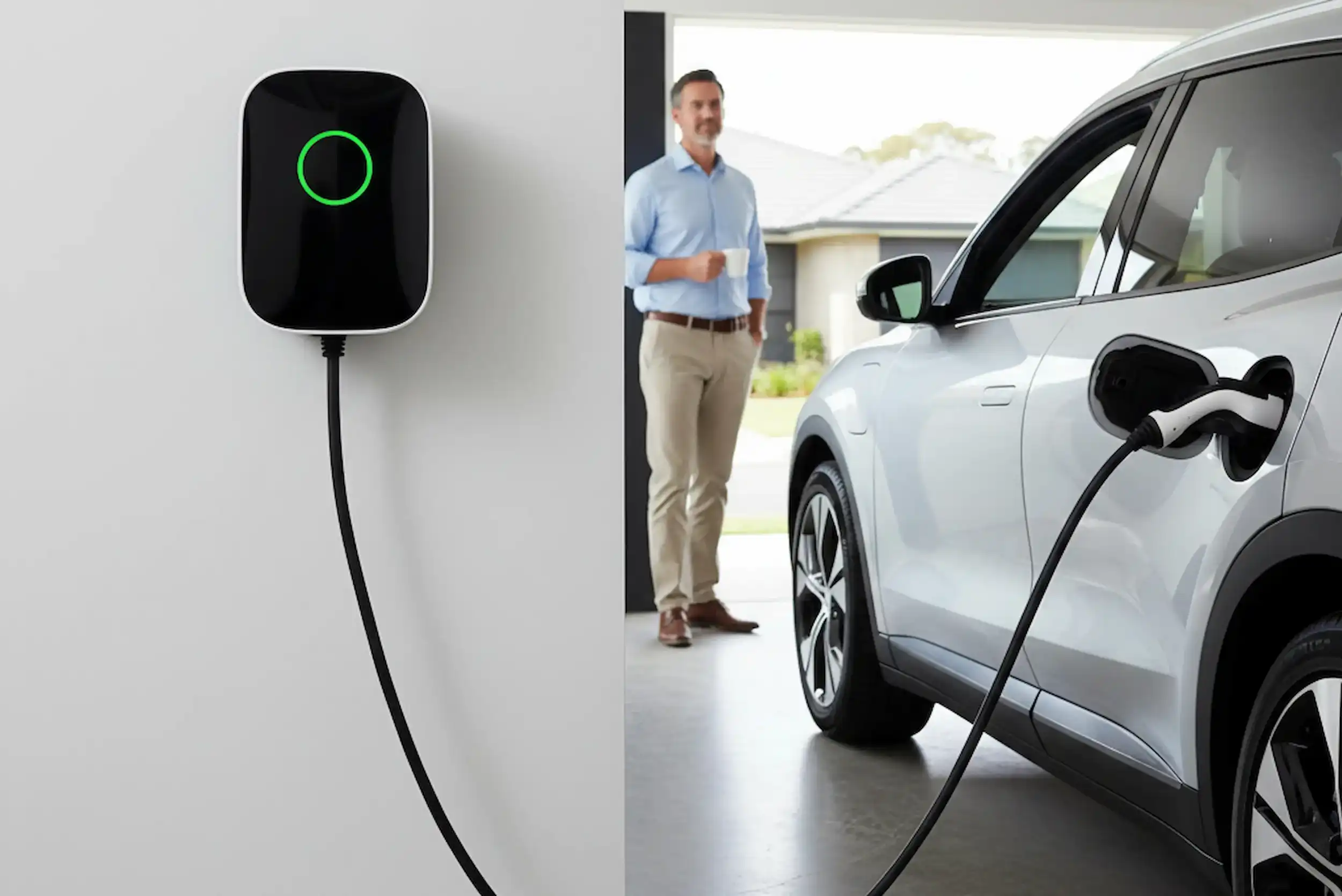
EV charging inside a residential garage during EV chargers installation in Rockhampton.
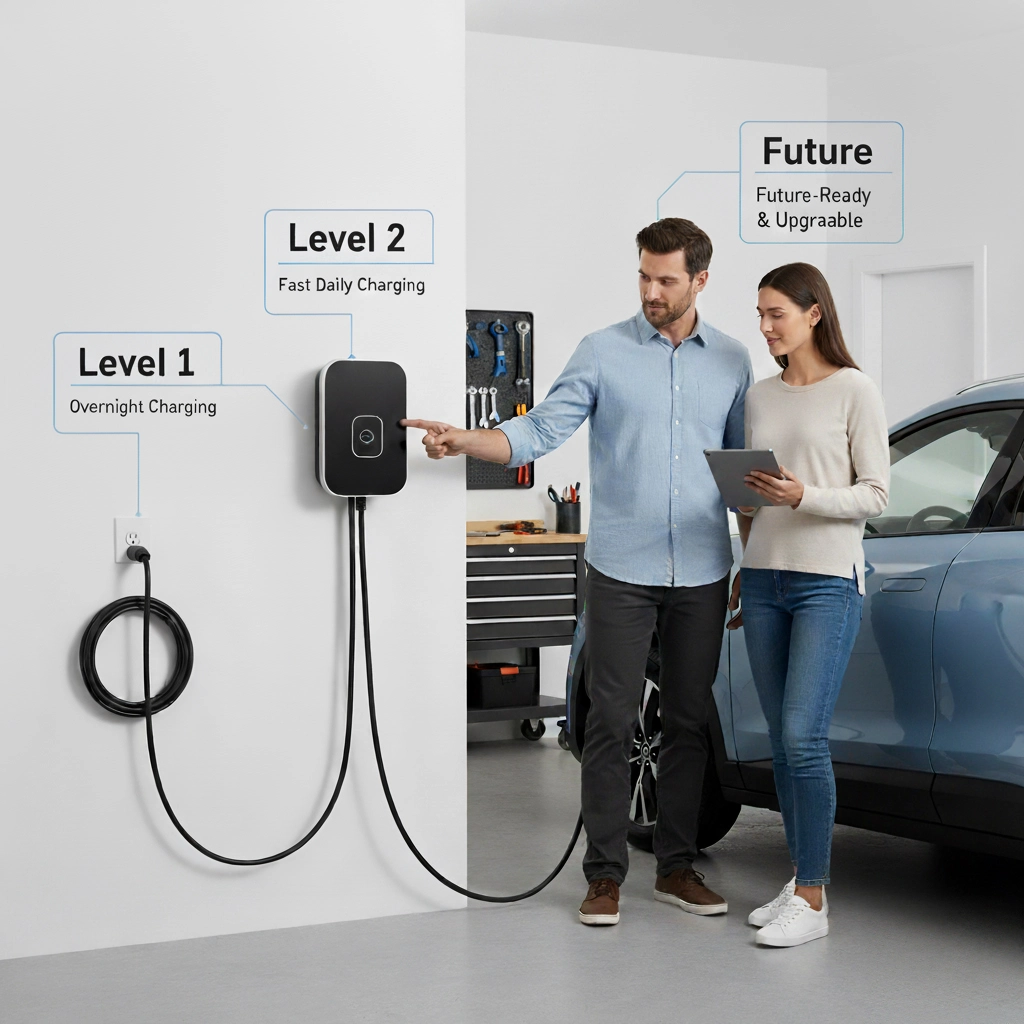
Couple reviewing a Level 1 and Level 2 EV charger setup in a Rockhampton garage with future-ready upgrade options displayed.

Commercial EV Charger Installation

Businesses, accommodation providers, retail centres, and car parks on the Sunshine Coast are increasingly adding EV charging as a practical amenity. For guests, customers, or tenants who drive electric vehicles, it removes a real barrier. For businesses with vehicle fleets, it simplifies overnight charging management on site.


Commercial installations involve different considerations from residential. Multiple charger units may need to share a single electrical supply without overloading it, which requires load balancing across the installation. Access management, whether that involves a payment system, app-based control, or open access, also needs to be defined as part of the design.


We assess the existing electrical infrastructure, confirm connection requirements with Energex, and design the installation to suit the number of bays, expected usage pattern, and any access or payment preferences.

What Installation Involves

Charging Speed and Daily Range

We inspect the electrical supply, switchboard condition, available circuit capacity, and the intended charger location, typically in or near the garage or carport.

Some homes require a dedicated circuit addition or a switchboard upgrade to safely support a charger. We identify this during the assessment and include it in the quote. There are no surprises mid-installation.

We confirm the most practical cable path from the switchboard to the charger, minimising visible runs where possible.

Our SAA-accredited electricians install the charger, complete the wiring to the dedicated circuit, and ensure everything meets Australian Standards.

We test the unit under load, set up any app connectivity or scheduling features, and walk you through operation before we leave.

EV charging inside a residential garage during EV chargers installation in Rockhampton.
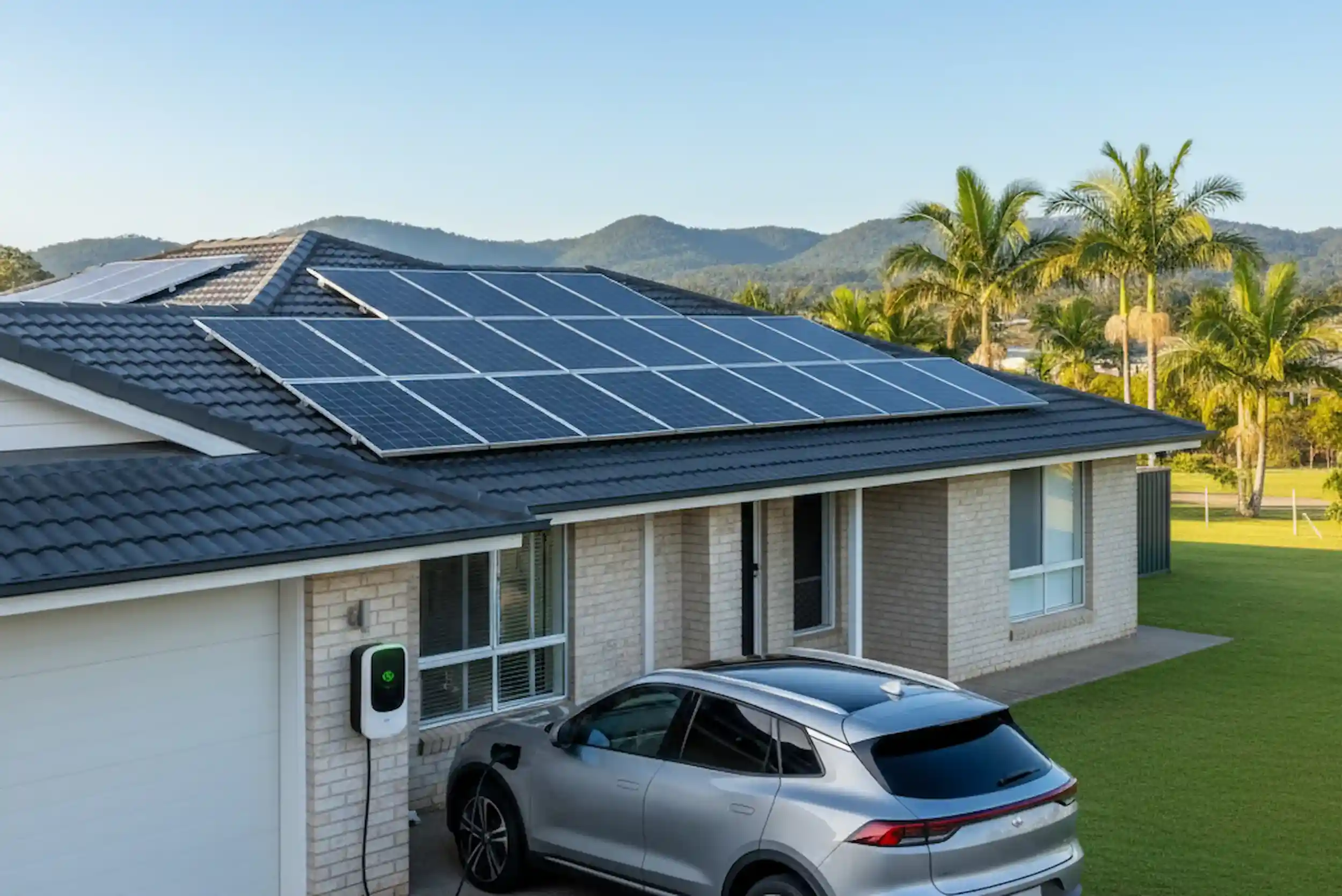
Modern EV charging station installed at a Rockhampton home with solar panels on the roof.
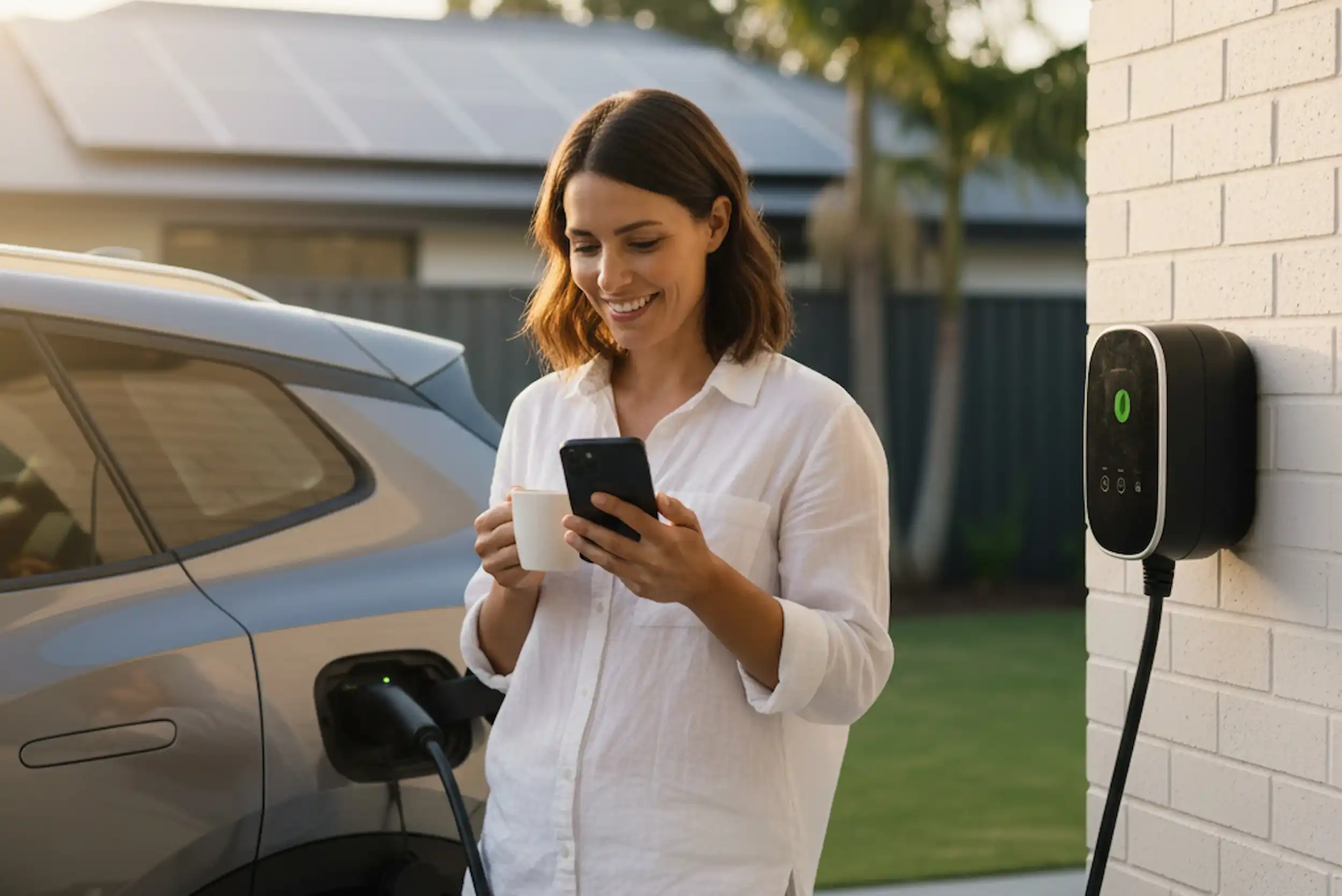
Residential EV charger installation in Rockhampton, showing a homeowner monitoring her electric car charging at a wall-mounted unit.

Why Choose National Solar Network

  • SAA-accredited electricians on every EV charger installation, residential and commercial
  • Honest upfront assessment: switchboard requirements are identified and quoted before work begins, not discovered on the day
  • Solar and battery integration experience: we can design EV charging as part of a broader solar system, not as a separate add-on
  • Local to the Sunshine Coast, based in Bells Creek, familiar with local electrical supply conditions and Energex requirements

Same team for aftercare: warranty support and servicing through the same people who completed the installation

Sarah M

“The installation was fast, professional, and the team explained everything clearly. We’re already seeing a great drop in our monthly power bill!”

James L

“The process for our commercial solar system was seamless from quote to final connection. A solid investment that will pay off quickly for our business”

Get an EV Charger Quote on the Sunshine Coast

If you are ready to install a home EV charger or exploring options for a commercial property, the starting point is a site assessment.


Contact National Solar Network to arrange a free consultation. We install EV charging stations across the full Sunshine Coast region, from Caloundra and Kawana through to Noosa and the hinterland. If you are also considering solar panels alongside a charger, we can assess both in a single visit.

Technician installing an EV charger at a residential Rockhampton home with solar panels on the roof.